•  
BOJ lifts rate to 17-year high of 0.5%

BOJ lifts rate to 17-year high of 0.5%

Bank of Japan Governor Kazuo Ueda attends a press conference at the central bank's headquarters in Tokyo on Jan. 24, 2025, following the BOJ's decision to raise its key interest rate from 0.25 percent to 0.5 percent, its highest level in about 17 years, on the second day of its two-day policy-setting meeting.

  •  
BOJ lifts rate to 17-year high of 0.5%

BOJ lifts rate to 17-year high of 0.5%

Bank of Japan Governor Kazuo Ueda attends a press conference at the central bank's headquarters in Tokyo on Jan. 24, 2025, following the BOJ's decision to raise its key interest rate from 0.25 percent to 0.5 percent, its highest level in about 17 years, on the second day of its two-day policy-setting meeting.

  •  
BOJ lifts rate to 17-year high of 0.5%

BOJ lifts rate to 17-year high of 0.5%

Bank of Japan Governor Kazuo Ueda attends a press conference at the central bank's headquarters in Tokyo on Jan. 24, 2025, following the BOJ's decision to raise its key interest rate from 0.25 percent to 0.5 percent, its highest level in about 17 years, on the second day of its two-day policy-setting meeting.

  •  
BOJ lifts rate to 17-year high of 0.5%

BOJ lifts rate to 17-year high of 0.5%

Bank of Japan Governor Kazuo Ueda attends a press conference at the central bank's headquarters in Tokyo on Jan. 24, 2025, following the BOJ's decision to raise its key interest rate from 0.25 percent to 0.5 percent, its highest level in about 17 years, on the second day of its two-day policy-setting meeting.

  •  
CHINA-SHANXI-CHANGZHI-HOMESTAY OWNER-MILLET FIELDS (CN)

CHINA-SHANXI-CHANGZHI-HOMESTAY OWNER-MILLET FIELDS (CN)

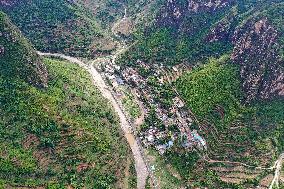
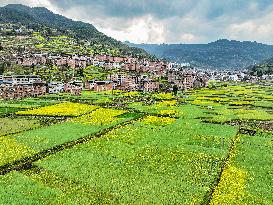
(240730) -- CHANGZHI, July 30, 2024 Photo by Xinhua/ABACAPRESS.COM) -- An aerial drone photo taken on July 24, 2024 shows the Langshuyuan Village, Changzhi City of north China's Shanxi Province. Changzhi City, located in the southeast of Shanxi Province, has a long history of millet planting. Wei Meiling, 44 years old, who had been worked in the millet fields with her parents since her childhood, returned to her hometown in 2015 after years of working in the city. Here in Changzhi City, she set up a cooperative which now owns more than 2,000 mu (about 133.3 hectares) of millet fields, and has helped 800 plus villagers increase their incomes. She often does livestreaming in the millet fields to introduce and promote local millet products, attracting many customers by the stunning natural scenery. She opened a homestay in 2023, which was transformed from her old houses. The homestay is popular among tourists especially during vacations. Wei also plans to expand the millet planting area, while integrating the lo

  •  
CHINA-SHANXI-CHANGZHI-HOMESTAY OWNER-MILLET FIELDS (CN)

CHINA-SHANXI-CHANGZHI-HOMESTAY OWNER-MILLET FIELDS (CN)

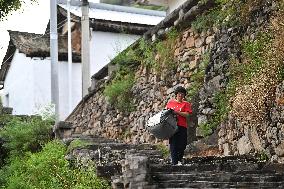
(240730) -- CHANGZHI, July 30, 2024 Photo by Xinhua/ABACAPRESS.COM) -- Wei Meiling carries bedding for cleaning in Langshuyuan Village, Changzhi City of north China's Shanxi Province, July 24, 2024. Changzhi City, located in the southeast of Shanxi Province, has a long history of millet planting. Wei Meiling, 44 years old, who had been worked in the millet fields with her parents since her childhood, returned to her hometown in 2015 after years of working in the city. Here in Changzhi City, she set up a cooperative which now owns more than 2,000 mu (about 133.3 hectares) of millet fields, and has helped 800 plus villagers increase their incomes. She often does livestreaming in the millet fields to introduce and promote local millet products, attracting many customers by the stunning natural scenery. She opened a homestay in 2023, which was transformed from her old houses. The homestay is popular among tourists especially during vacations. Wei also plans to expand the millet planting area, while integrating th

  •  
CHINA-SHANXI-CHANGZHI-HOMESTAY OWNER-MILLET FIELDS (CN)

CHINA-SHANXI-CHANGZHI-HOMESTAY OWNER-MILLET FIELDS (CN)

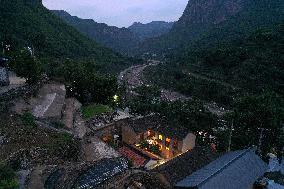
(240730) -- CHANGZHI, July 30, 2024 Photo by Xinhua/ABACAPRESS.COM) -- An aerial drone photo taken on July 24, 2024 shows Wei Meiling's homestay in Langshuyuan Village, Changzhi City of north China's Shanxi Province. Changzhi City, located in the southeast of Shanxi Province, has a long history of millet planting. Wei Meiling, 44 years old, who had been worked in the millet fields with her parents since her childhood, returned to her hometown in 2015 after years of working in the city. Here in Changzhi City, she set up a cooperative which now owns more than 2,000 mu (about 133.3 hectares) of millet fields, and has helped 800 plus villagers increase their incomes. She often does livestreaming in the millet fields to introduce and promote local millet products, attracting many customers by the stunning natural scenery. She opened a homestay in 2023, which was transformed from her old houses. The homestay is popular among tourists especially during vacations. Wei also plans to expand the millet planting area, wh

  •  
CHINA-SHANXI-CHANGZHI-HOMESTAY OWNER-MILLET FIELDS (CN)

CHINA-SHANXI-CHANGZHI-HOMESTAY OWNER-MILLET FIELDS (CN)

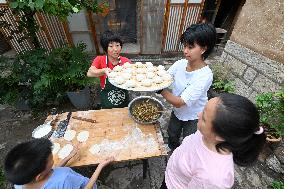
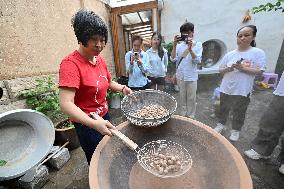
(240730) -- CHANGZHI, July 30, 2024 Photo by Xinhua/ABACAPRESS.COM) -- Wei Meiling (L, back) makes steamed buns with customers at her homestay in Langshuyuan Village, Changzhi City of north China's Shanxi Province, July 24, 2024. Changzhi City, located in the southeast of Shanxi Province, has a long history of millet planting. Wei Meiling, 44 years old, who had been worked in the millet fields with her parents since her childhood, returned to her hometown in 2015 after years of working in the city. Here in Changzhi City, she set up a cooperative which now owns more than 2,000 mu (about 133.3 hectares) of millet fields, and has helped 800 plus villagers increase their incomes. She often does livestreaming in the millet fields to introduce and promote local millet products, attracting many customers by the stunning natural scenery. She opened a homestay in 2023, which was transformed from her old houses. The homestay is popular among tourists especially during vacations. Wei also plans to expand the millet plan

  •  
CHINA-SHANXI-CHANGZHI-HOMESTAY OWNER-MILLET FIELDS (CN)

CHINA-SHANXI-CHANGZHI-HOMESTAY OWNER-MILLET FIELDS (CN)

(240730) -- CHANGZHI, July 30, 2024 Photo by Xinhua/ABACAPRESS.COM) -- Wei Meiling poses for a photo in front of her homestay in Langshuyuan Village, Changzhi City of north China's Shanxi Province, July 24, 2024. Changzhi City, located in the southeast of Shanxi Province, has a long history of millet planting. Wei Meiling, 44 years old, who had been worked in the millet fields with her parents since her childhood, returned to her hometown in 2015 after years of working in the city. Here in Changzhi City, she set up a cooperative which now owns more than 2,000 mu (about 133.3 hectares) of millet fields, and has helped 800 plus villagers increase their incomes. She often does livestreaming in the millet fields to introduce and promote local millet products, attracting many customers by the stunning natural scenery. She opened a homestay in 2023, which was transformed from her old houses. The homestay is popular among tourists especially during vacations. Wei also plans to expand the millet planting area, while

  •  
CHINA-SHANXI-CHANGZHI-HOMESTAY OWNER-MILLET FIELDS (CN)

CHINA-SHANXI-CHANGZHI-HOMESTAY OWNER-MILLET FIELDS (CN)

(240730) -- CHANGZHI, July 30, 2024 Photo by Xinhua/ABACAPRESS.COM) -- Wei Meiling (front) makes traditional local food for customers at her homestay in Langshuyuan Village, Changzhi City of north China's Shanxi Province, July 24, 2024. Changzhi City, located in the southeast of Shanxi Province, has a long history of millet planting. Wei Meiling, 44 years old, who had been worked in the millet fields with her parents since her childhood, returned to her hometown in 2015 after years of working in the city. Here in Changzhi City, she set up a cooperative which now owns more than 2,000 mu (about 133.3 hectares) of millet fields, and has helped 800 plus villagers increase their incomes. She often does livestreaming in the millet fields to introduce and promote local millet products, attracting many customers by the stunning natural scenery. She opened a homestay in 2023, which was transformed from her old houses. The homestay is popular among tourists especially during vacations. Wei also plans to expand the mill

  •  
CHINA-SHANXI-CHANGZHI-HOMESTAY OWNER-MILLET FIELDS (CN)

CHINA-SHANXI-CHANGZHI-HOMESTAY OWNER-MILLET FIELDS (CN)

(240730) -- CHANGZHI, July 30, 2024 Photo by Xinhua/ABACAPRESS.COM) -- Wei Meiling introduces her homestay via livestreaming in Langshuyuan Village, Changzhi City of north China's Shanxi Province, July 24, 2024. Changzhi City, located in the southeast of Shanxi Province, has a long history of millet planting. Wei Meiling, 44 years old, who had been worked in the millet fields with her parents since her childhood, returned to her hometown in 2015 after years of working in the city. Here in Changzhi City, she set up a cooperative which now owns more than 2,000 mu (about 133.3 hectares) of millet fields, and has helped 800 plus villagers increase their incomes. She often does livestreaming in the millet fields to introduce and promote local millet products, attracting many customers by the stunning natural scenery. She opened a homestay in 2023, which was transformed from her old houses. The homestay is popular among tourists especially during vacations. Wei also plans to expand the millet planting area, while i

  •  
CHINA-SHANXI-CHANGZHI-HOMESTAY OWNER-MILLET FIELDS (CN)

CHINA-SHANXI-CHANGZHI-HOMESTAY OWNER-MILLET FIELDS (CN)

(240730) -- CHANGZHI, July 30, 2024 Photo by Xinhua/ABACAPRESS.COM) -- Wei Meiling cleans her homestay in Langshuyuan Village, Changzhi City of north China's Shanxi Province, July 24, 2024. Changzhi City, located in the southeast of Shanxi Province, has a long history of millet planting. Wei Meiling, 44 years old, who had been worked in the millet fields with her parents since her childhood, returned to her hometown in 2015 after years of working in the city. Here in Changzhi City, she set up a cooperative which now owns more than 2,000 mu (about 133.3 hectares) of millet fields, and has helped 800 plus villagers increase their incomes. She often does livestreaming in the millet fields to introduce and promote local millet products, attracting many customers by the stunning natural scenery. She opened a homestay in 2023, which was transformed from her old houses. The homestay is popular among tourists especially during vacations. Wei also plans to expand the millet planting area, while integrating the long-te

  •  
CHINA-SHANXI-CHANGZHI-HOMESTAY OWNER-MILLET FIELDS (CN)

CHINA-SHANXI-CHANGZHI-HOMESTAY OWNER-MILLET FIELDS (CN)

(240730) -- CHANGZHI, July 30, 2024 Photo by Xinhua/ABACAPRESS.COM) -- Wei Meiling makes bed at her homestay in Langshuyuan Village, Changzhi City of north China's Shanxi Province, July 24, 2024. Changzhi City, located in the southeast of Shanxi Province, has a long history of millet planting. Wei Meiling, 44 years old, who had been worked in the millet fields with her parents since her childhood, returned to her hometown in 2015 after years of working in the city. Here in Changzhi City, she set up a cooperative which now owns more than 2,000 mu (about 133.3 hectares) of millet fields, and has helped 800 plus villagers increase their incomes. She often does livestreaming in the millet fields to introduce and promote local millet products, attracting many customers by the stunning natural scenery. She opened a homestay in 2023, which was transformed from her old houses. The homestay is popular among tourists especially during vacations. Wei also plans to expand the millet planting area, while integrating the l

  •  
CHINA-SHANXI-CHANGZHI-HOMESTAY OWNER-MILLET FIELDS (CN)

CHINA-SHANXI-CHANGZHI-HOMESTAY OWNER-MILLET FIELDS (CN)

(240730) -- CHANGZHI, July 30, 2024 Photo by Xinhua/ABACAPRESS.COM) -- Wei Meiling cleans her homestay in Langshuyuan Village, Changzhi City of north China's Shanxi Province, July 24, 2024. Changzhi City, located in the southeast of Shanxi Province, has a long history of millet planting. Wei Meiling, 44 years old, who had been worked in the millet fields with her parents since her childhood, returned to her hometown in 2015 after years of working in the city. Here in Changzhi City, she set up a cooperative which now owns more than 2,000 mu (about 133.3 hectares) of millet fields, and has helped 800 plus villagers increase their incomes. She often does livestreaming in the millet fields to introduce and promote local millet products, attracting many customers by the stunning natural scenery. She opened a homestay in 2023, which was transformed from her old houses. The homestay is popular among tourists especially during vacations. Wei also plans to expand the millet planting area, while integrating the long-te

  •  
CHINA-XINJIANG-TACHENG-TATAR ETHNIC CULTURE-INHERITOR (CN)

CHINA-XINJIANG-TACHENG-TATAR ETHNIC CULTURE-INHERITOR (CN)

(240727) -- TACHENG, July 27, 2024 Photo by Xinhua/ABACAPRESS.COM) -- Zaitunna (L) talks about traditional Tatar pastries with customers at her retail store in Tacheng City, northwest China's Xinjiang Uygur Autonomous Region, July 24, 2024. Zaitunna, an ethnic Tatar woman living in Tacheng City of Xinjiang, is a representative inheritor of Saban Festival of Tatar ethnic group, which is one of the national intangible cultural heritages. She is also famous in the city for her expertise in making traditional Tatar pastries. Over the years, Zaitunna and her husband have been committed to the inheritance and promotion of Tatar ethnic culture. They used their old family house built in 1915 to establish the first family museum of Tatar ethnic culture in Tacheng City, displaying a collection of more than 500 pieces of old objects full of Tatar characteristics, which carry the life memories of the family for several generations. Today, their family museum attracts visitors from all over the country, and the Tatar past

  •  
CHINA-XINJIANG-ALTAY-KANAS SCENIC AREA-POLICE STATION (CN)

CHINA-XINJIANG-ALTAY-KANAS SCENIC AREA-POLICE STATION (CN)

(240724) -- BURQIN, July 24, 2024 Photo by Xinhua/ABACAPRESS.COM) -- A police officer of the Kanas border police station tells a tourist about new rules on UAV in the Kanas scenic area of Altay, northwest China's Xinjiang Uygur Autonomous Region, July 22, 2024. The Kanas border police station is located in the Kanas scenic area of Altay. In recent years, the tourism industry in Altay has developed vigorously. According to police officers at the station, the Kanas scenic area receives a maximum of over 20,000 tourists per day. The station has joined forces with local people and staff of scenic spots to solve the problems of tourists, greatly improving the police efficiency. Photo by Xinhua/ABACAPRESS.COM/Ding Lei)

  •  
XINHUA PHOTOS OF THE DAY

XINHUA PHOTOS OF THE DAY

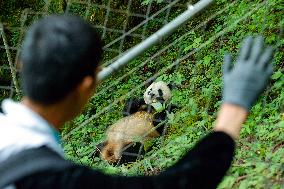
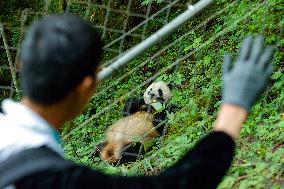
(240630) -- BEIJING, June 30, 2024 Photo by Xinhua/ABACAPRESS.COM) -- Staff member Mu Shijie, dressed up in a panda costume, feeds giant panda Xian Xian at the second-phase giant panda wild training fields of Tiantai Mountain in Wolong National Nature Reserve in southwest China's Sichuan Province, June 24, 2024. In recent years, China has made significant progress in panda conservation through a series of measures, including forest and wildlife protection as well as the construction of giant panda national parks. The wild giant panda population in China has grown from about 1,100 in the 1980s to nearly 1,900. Photo by Xinhua/ABACAPRESS.COM/Shen Bohan)

  •  
Giant Panda Reintroduction - China

Giant Panda Reintroduction - China

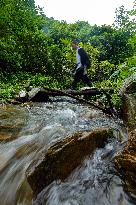
WOLONG, June 29, 2024 -- Staff member Mu Shijie prepares to patrol the giant panda wild training fields of Tiantai Mountain in Wolong National Nature Reserve in southwest China's Sichuan Province, June 24, 2024. In recent years, China has made significant progress in panda conservation through a series of measures, including forest and wildlife protection as well as the construction of giant panda national parks. The wild giant panda population in China has grown from about 1,100 in the 1980s to nearly 1,900. Giant panda reintroduction refers to releasing captive-bred giant pandas to their historical distribution areas to live and reproduce after acclimatization training so as to rebuild the wild population of the species. China Conservation and Research Center for the Giant Panda (CCRCGP) started a reintroduction program in 2003. It has reintroduced eleven pandas into the wild, nine of which survived. In the future, the center will continue to train more individual panda cubs using the mother-cub process bef

  •  
Giant Panda Reintroduction - China

Giant Panda Reintroduction - China

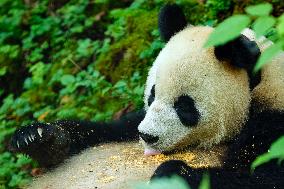
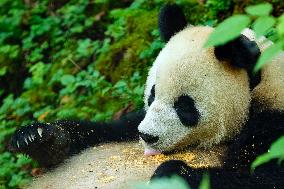
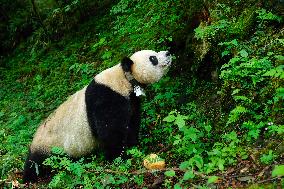
WOLONG, June 29, 2024 -- Giant panda Xian Xian has food at the second-phase giant panda wild training fields of Tiantai Mountain in Wolong National Nature Reserve in southwest China's Sichuan Province, June 24, 2024. In recent years, China has made significant progress in panda conservation through a series of measures, including forest and wildlife protection as well as the construction of giant panda national parks. The wild giant panda population in China has grown from about 1,100 in the 1980s to nearly 1,900. Giant panda reintroduction refers to releasing captive-bred giant pandas to their historical distribution areas to live and reproduce after acclimatization training so as to rebuild the wild population of the species. China Conservation and Research Center for the Giant Panda (CCRCGP) started a reintroduction program in 2003. It has reintroduced eleven pandas into the wild, nine of which survived. In the future, the center will continue to train more individual panda cubs using the mother-cub proces

  •  
Giant Panda Reintroduction - China

Giant Panda Reintroduction - China

WOLONG, June 29, 2024 -- Giant panda Xian Xian has food at the second-phase giant panda wild training fields of Tiantai Mountain in Wolong National Nature Reserve in southwest China's Sichuan Province, June 24, 2024. In recent years, China has made significant progress in panda conservation through a series of measures, including forest and wildlife protection as well as the construction of giant panda national parks. The wild giant panda population in China has grown from about 1,100 in the 1980s to nearly 1,900. Giant panda reintroduction refers to releasing captive-bred giant pandas to their historical distribution areas to live and reproduce after acclimatization training so as to rebuild the wild population of the species. China Conservation and Research Center for the Giant Panda (CCRCGP) started a reintroduction program in 2003. It has reintroduced eleven pandas into the wild, nine of which survived. In the future, the center will continue to train more individual panda cubs using the mother-cub proces

  •  
Giant Panda Reintroduction - China

Giant Panda Reintroduction - China

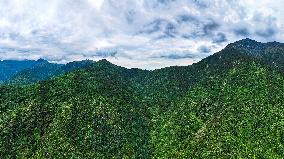
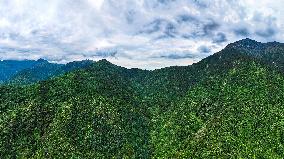
WOLONG, June 29, 2024 -- An aerial drone photo taken on June 24, 2024 shows a view of giant panda wild training fields of Tiantai Mountain in Wolong National Nature Reserve in southwest China's Sichuan Province, June 24, 2024. In recent years, China has made significant progress in panda conservation through a series of measures, including forest and wildlife protection as well as the construction of giant panda national parks. The wild giant panda population in China has grown from about 1,100 in the 1980s to nearly 1,900. Giant panda reintroduction refers to releasing captive-bred giant pandas to their historical distribution areas to live and reproduce after acclimatization training so as to rebuild the wild population of the species. China Conservation and Research Center for the Giant Panda (CCRCGP) started a reintroduction program in 2003. It has reintroduced eleven pandas into the wild, nine of which survived. In the future, the center will continue to train more individual panda cubs using the mother-

  •  
Giant Panda Reintroduction - China

Giant Panda Reintroduction - China

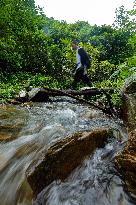
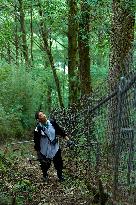
WOLONG, June 29, 2024 -- Staff member Mu Shijie is pictured on the way to the second-phase giant panda wild training fields of Tiantai Mountain in Wolong National Nature Reserve in southwest China's Sichuan Province, June 24, 2024. In recent years, China has made significant progress in panda conservation through a series of measures, including forest and wildlife protection as well as the construction of giant panda national parks. The wild giant panda population in China has grown from about 1,100 in the 1980s to nearly 1,900. Giant panda reintroduction refers to releasing captive-bred giant pandas to their historical distribution areas to live and reproduce after acclimatization training so as to rebuild the wild population of the species. China Conservation and Research Center for the Giant Panda (CCRCGP) started a reintroduction program in 2003. It has reintroduced eleven pandas into the wild, nine of which survived. In the future, the center will continue to train more individual panda cubs using the mo

  •  
Giant Panda Reintroduction - China

Giant Panda Reintroduction - China

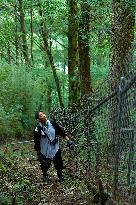
WOLONG, June 29, 2024 -- Staff member Mu Shijie looks for giant panda cubs while patrolling the second-phase giant panda wild training fields of Tiantai Mountain in Wolong National Nature Reserve in southwest China's Sichuan Province, June 24, 2024. In recent years, China has made significant progress in panda conservation through a series of measures, including forest and wildlife protection as well as the construction of giant panda national parks. The wild giant panda population in China has grown from about 1,100 in the 1980s to nearly 1,900. Giant panda reintroduction refers to releasing captive-bred giant pandas to their historical distribution areas to live and reproduce after acclimatization training so as to rebuild the wild population of the species. China Conservation and Research Center for the Giant Panda (CCRCGP) started a reintroduction program in 2003. It has reintroduced eleven pandas into the wild, nine of which survived. In the future, the center will continue to train more individual panda

  •  
Giant Panda Reintroduction - China

Giant Panda Reintroduction - China

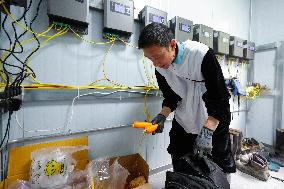
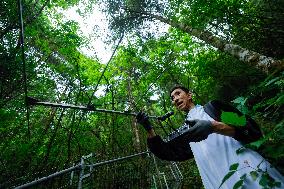
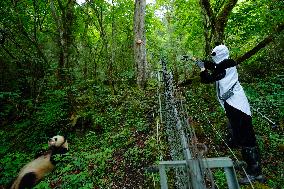
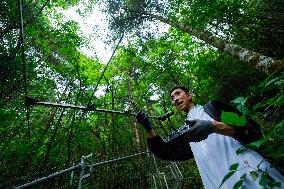
WOLONG, June 29, 2024 -- Staff member Mu Shijie uses a radio positioning device to trace giant panda Xian Xian while calling out her name at Tiantai Mountain in Wolong National Nature Reserve in southwest China's Sichuan Province, June 24, 2024. In recent years, China has made significant progress in panda conservation through a series of measures, including forest and wildlife protection as well as the construction of giant panda national parks. The wild giant panda population in China has grown from about 1,100 in the 1980s to nearly 1,900. Giant panda reintroduction refers to releasing captive-bred giant pandas to their historical distribution areas to live and reproduce after acclimatization training so as to rebuild the wild population of the species. China Conservation and Research Center for the Giant Panda (CCRCGP) started a reintroduction program in 2003. It has reintroduced eleven pandas into the wild, nine of which survived. In the future, the center will continue to train more individual panda cub

  •  
Giant Panda Reintroduction - China

Giant Panda Reintroduction - China

WOLONG, June 29, 2024 -- Staff member Mu Shijie uses a DIY bamboo leaf whislte to call giant panda Hui Hui out for foraging at the second-phase giant panda wild training fields of Tiantai Mountain in Wolong National Nature Reserve in southwest China's Sichuan Province, June 24, 2024. In recent years, China has made significant progress in panda conservation through a series of measures, including forest and wildlife protection as well as the construction of giant panda national parks. The wild giant panda population in China has grown from about 1,100 in the 1980s to nearly 1,900. Giant panda reintroduction refers to releasing captive-bred giant pandas to their historical distribution areas to live and reproduce after acclimatization training so as to rebuild the wild population of the species. China Conservation and Research Center for the Giant Panda (CCRCGP) started a reintroduction program in 2003. It has reintroduced eleven pandas into the wild, nine of which survived. In the future, the center will cont

  •  
Giant Panda Reintroduction - China

Giant Panda Reintroduction - China

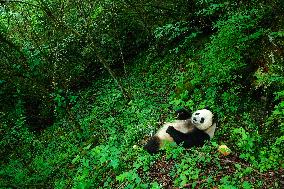
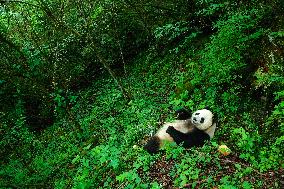
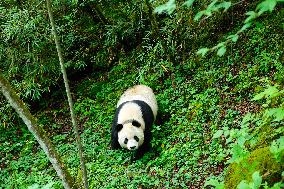
WOLONG, June 29, 2024 -- Giant panda Xian Xian is pictured at the second-phase giant panda wild training fields of Tiantai Mountain in Wolong National Nature Reserve in southwest China's Sichuan Province, June 24, 2024. In recent years, China has made significant progress in panda conservation through a series of measures, including forest and wildlife protection as well as the construction of giant panda national parks. The wild giant panda population in China has grown from about 1,100 in the 1980s to nearly 1,900. Giant panda reintroduction refers to releasing captive-bred giant pandas to their historical distribution areas to live and reproduce after acclimatization training so as to rebuild the wild population of the species. China Conservation and Research Center for the Giant Panda (CCRCGP) started a reintroduction program in 2003. It has reintroduced eleven pandas into the wild, nine of which survived. In the future, the center will continue to train more individual panda cubs using the mother-cub pro

  •  
Giant Panda Reintroduction - China

Giant Panda Reintroduction - China

WOLONG, June 29, 2024 -- Staff member Mu Shijie, dressed up in a panda costume, feeds giant panda Xian Xian at the second-phase giant panda wild training fields of Tiantai Mountain in Wolong National Nature Reserve in southwest China's Sichuan Province, June 24, 2024. In recent years, China has made significant progress in panda conservation through a series of measures, including forest and wildlife protection as well as the construction of giant panda national parks. The wild giant panda population in China has grown from about 1,100 in the 1980s to nearly 1,900. Giant panda reintroduction refers to releasing captive-bred giant pandas to their historical distribution areas to live and reproduce after acclimatization training so as to rebuild the wild population of the species. China Conservation and Research Center for the Giant Panda (CCRCGP) started a reintroduction program in 2003. It has reintroduced eleven pandas into the wild, nine of which survived. In the future, the center will continue to train mo

  •  
Giant Panda Reintroduction - China

Giant Panda Reintroduction - China

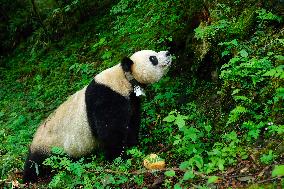
WOLONG, June 29, 2024 -- Giant panda Xian Xian has food at the second-phase giant panda wild training fields of Tiantai Mountain in Wolong National Nature Reserve in southwest China's Sichuan Province, June 24, 2024. In recent years, China has made significant progress in panda conservation through a series of measures, including forest and wildlife protection as well as the construction of giant panda national parks. The wild giant panda population in China has grown from about 1,100 in the 1980s to nearly 1,900. Giant panda reintroduction refers to releasing captive-bred giant pandas to their historical distribution areas to live and reproduce after acclimatization training so as to rebuild the wild population of the species. China Conservation and Research Center for the Giant Panda (CCRCGP) started a reintroduction program in 2003. It has reintroduced eleven pandas into the wild, nine of which survived. In the future, the center will continue to train more individual panda cubs using the mother-cub proces

  •  
Giant Panda Reintroduction - China

Giant Panda Reintroduction - China

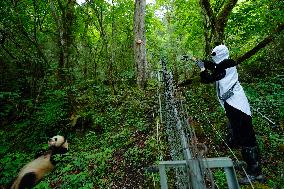
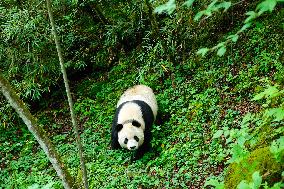
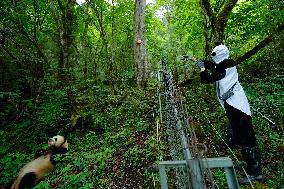
WOLONG, June 29, 2024 -- Giant panda Xian Xian comes out of the bamboo forest upon hearing the foraging call made by staff member Mu Shijie at the second-phase giant panda wild training fields of Tiantai Mountain in Wolong National Nature Reserve in southwest China's Sichuan Province, June 24, 2024. In recent years, China has made significant progress in panda conservation through a series of measures, including forest and wildlife protection as well as the construction of giant panda national parks. The wild giant panda population in China has grown from about 1,100 in the 1980s to nearly 1,900. Giant panda reintroduction refers to releasing captive-bred giant pandas to their historical distribution areas to live and reproduce after acclimatization training so as to rebuild the wild population of the species. China Conservation and Research Center for the Giant Panda (CCRCGP) started a reintroduction program in 2003. It has reintroduced eleven pandas into the wild, nine of which survived. In the future, the

  •  
Giant Panda Reintroduction - China

Giant Panda Reintroduction - China

WOLONG, June 29, 2024 -- Staff member Mu Shijie records videos of giant panda Xian Xian outside the second-phase giant panda wild training fields of Tiantai Mountain in Wolong National Nature Reserve in southwest China's Sichuan Province, June 24, 2024. In recent years, China has made significant progress in panda conservation through a series of measures, including forest and wildlife protection as well as the construction of giant panda national parks. The wild giant panda population in China has grown from about 1,100 in the 1980s to nearly 1,900. Giant panda reintroduction refers to releasing captive-bred giant pandas to their historical distribution areas to live and reproduce after acclimatization training so as to rebuild the wild population of the species. China Conservation and Research Center for the Giant Panda (CCRCGP) started a reintroduction program in 2003. It has reintroduced eleven pandas into the wild, nine of which survived. In the future, the center will continue to train more individual p

  •  
Giant Panda Reintroduction - China

Giant Panda Reintroduction - China

WOLONG, June 29, 2024 -- Staff member Mu Shijie waves goodbye to giant panda Xian Xian after feeding her at the second-phase giant panda wild training fields of Tiantai Mountain in Wolong National Nature Reserve in southwest China's Sichuan Province, June 24, 2024. In recent years, China has made significant progress in panda conservation through a series of measures, including forest and wildlife protection as well as the construction of giant panda national parks. The wild giant panda population in China has grown from about 1,100 in the 1980s to nearly 1,900. Giant panda reintroduction refers to releasing captive-bred giant pandas to their historical distribution areas to live and reproduce after acclimatization training so as to rebuild the wild population of the species. China Conservation and Research Center for the Giant Panda (CCRCGP) started a reintroduction program in 2003. It has reintroduced eleven pandas into the wild, nine of which survived. In the future, the center will continue to train more

  •  
(FOCUS)CHINA-SICHUAN-GIANT PANDA-REINTRODUCTION (CN)

(FOCUS)CHINA-SICHUAN-GIANT PANDA-REINTRODUCTION (CN)

(240629) -- WOLONG, June 29, 2024 Photo by Xinhua/ABACAPRESS.COM) -- Staff member Mu Shijie looks for giant panda cubs while patrolling the second-phase giant panda wild training fields of Tiantai Mountain in Wolong National Nature Reserve in southwest China's Sichuan Province, June 24, 2024. In recent years, China has made significant progress in panda conservation through a series of measures, including forest and wildlife protection as well as the construction of giant panda national parks. The wild giant panda population in China has grown from about 1,100 in the 1980s to nearly 1,900. Giant panda reintroduction refers to releasing captive-bred giant pandas to their historical distribution areas to live and reproduce after acclimatization training so as to rebuild the wild population of the species. China Conservation and Research Center for the Giant Panda (CCRCGP) started a reintroduction program in 2003. It has reintroduced eleven pandas into the wild, nine of which survived. In the future, the center

  •  
(FOCUS)CHINA-SICHUAN-GIANT PANDA-REINTRODUCTION (CN)

(FOCUS)CHINA-SICHUAN-GIANT PANDA-REINTRODUCTION (CN)

(240629) -- WOLONG, June 29, 2024 Photo by Xinhua/ABACAPRESS.COM) -- Giant panda Xian Xian has food at the second-phase giant panda wild training fields of Tiantai Mountain in Wolong National Nature Reserve in southwest China's Sichuan Province, June 24, 2024. In recent years, China has made significant progress in panda conservation through a series of measures, including forest and wildlife protection as well as the construction of giant panda national parks. The wild giant panda population in China has grown from about 1,100 in the 1980s to nearly 1,900. Giant panda reintroduction refers to releasing captive-bred giant pandas to their historical distribution areas to live and reproduce after acclimatization training so as to rebuild the wild population of the species. China Conservation and Research Center for the Giant Panda (CCRCGP) started a reintroduction program in 2003. It has reintroduced eleven pandas into the wild, nine of which survived. In the future, the center will continue to train more indiv

  •  
(FOCUS)CHINA-SICHUAN-GIANT PANDA-REINTRODUCTION (CN)

(FOCUS)CHINA-SICHUAN-GIANT PANDA-REINTRODUCTION (CN)

(240629) -- WOLONG, June 29, 2024 Photo by Xinhua/ABACAPRESS.COM) -- Staff member Mu Shijie waves goodbye to giant panda Xian Xian after feeding her at the second-phase giant panda wild training fields of Tiantai Mountain in Wolong National Nature Reserve in southwest China's Sichuan Province, June 24, 2024. In recent years, China has made significant progress in panda conservation through a series of measures, including forest and wildlife protection as well as the construction of giant panda national parks. The wild giant panda population in China has grown from about 1,100 in the 1980s to nearly 1,900. Giant panda reintroduction refers to releasing captive-bred giant pandas to their historical distribution areas to live and reproduce after acclimatization training so as to rebuild the wild population of the species. China Conservation and Research Center for the Giant Panda (CCRCGP) started a reintroduction program in 2003. It has reintroduced eleven pandas into the wild, nine of which survived. In the fut

  •  
(FOCUS)CHINA-SICHUAN-GIANT PANDA-REINTRODUCTION (CN)

(FOCUS)CHINA-SICHUAN-GIANT PANDA-REINTRODUCTION (CN)

(240629) -- WOLONG, June 29, 2024 Photo by Xinhua/ABACAPRESS.COM) -- Staff member Mu Shijie uses a DIY bamboo leaf whislte to call giant panda Hui Hui out for foraging at the second-phase giant panda wild training fields of Tiantai Mountain in Wolong National Nature Reserve in southwest China's Sichuan Province, June 24, 2024. In recent years, China has made significant progress in panda conservation through a series of measures, including forest and wildlife protection as well as the construction of giant panda national parks. The wild giant panda population in China has grown from about 1,100 in the 1980s to nearly 1,900. Giant panda reintroduction refers to releasing captive-bred giant pandas to their historical distribution areas to live and reproduce after acclimatization training so as to rebuild the wild population of the species. China Conservation and Research Center for the Giant Panda (CCRCGP) started a reintroduction program in 2003. It has reintroduced eleven pandas into the wild, nine of which s

  •  
(FOCUS)CHINA-SICHUAN-GIANT PANDA-REINTRODUCTION (CN)

(FOCUS)CHINA-SICHUAN-GIANT PANDA-REINTRODUCTION (CN)

(240629) -- WOLONG, June 29, 2024 Photo by Xinhua/ABACAPRESS.COM) -- Giant panda Xian Xian is pictured at the second-phase giant panda wild training fields of Tiantai Mountain in Wolong National Nature Reserve in southwest China's Sichuan Province, June 24, 2024. In recent years, China has made significant progress in panda conservation through a series of measures, including forest and wildlife protection as well as the construction of giant panda national parks. The wild giant panda population in China has grown from about 1,100 in the 1980s to nearly 1,900. Giant panda reintroduction refers to releasing captive-bred giant pandas to their historical distribution areas to live and reproduce after acclimatization training so as to rebuild the wild population of the species. China Conservation and Research Center for the Giant Panda (CCRCGP) started a reintroduction program in 2003. It has reintroduced eleven pandas into the wild, nine of which survived. In the future, the center will continue to train more in

  •  
(FOCUS)CHINA-SICHUAN-GIANT PANDA-REINTRODUCTION (CN)

(FOCUS)CHINA-SICHUAN-GIANT PANDA-REINTRODUCTION (CN)

(240629) -- WOLONG, June 29, 2024 Photo by Xinhua/ABACAPRESS.COM) -- Staff member Mu Shijie is pictured on the way to the second-phase giant panda wild training fields of Tiantai Mountain in Wolong National Nature Reserve in southwest China's Sichuan Province, June 24, 2024. In recent years, China has made significant progress in panda conservation through a series of measures, including forest and wildlife protection as well as the construction of giant panda national parks. The wild giant panda population in China has grown from about 1,100 in the 1980s to nearly 1,900. Giant panda reintroduction refers to releasing captive-bred giant pandas to their historical distribution areas to live and reproduce after acclimatization training so as to rebuild the wild population of the species. China Conservation and Research Center for the Giant Panda (CCRCGP) started a reintroduction program in 2003. It has reintroduced eleven pandas into the wild, nine of which survived. In the future, the center will continue to t

  •  
(FOCUS)CHINA-SICHUAN-GIANT PANDA-REINTRODUCTION (CN)

(FOCUS)CHINA-SICHUAN-GIANT PANDA-REINTRODUCTION (CN)

(240629) -- WOLONG, June 29, 2024 Photo by Xinhua/ABACAPRESS.COM) -- Giant panda Xian Xian has food at the second-phase giant panda wild training fields of Tiantai Mountain in Wolong National Nature Reserve in southwest China's Sichuan Province, June 24, 2024. In recent years, China has made significant progress in panda conservation through a series of measures, including forest and wildlife protection as well as the construction of giant panda national parks. The wild giant panda population in China has grown from about 1,100 in the 1980s to nearly 1,900. Giant panda reintroduction refers to releasing captive-bred giant pandas to their historical distribution areas to live and reproduce after acclimatization training so as to rebuild the wild population of the species. China Conservation and Research Center for the Giant Panda (CCRCGP) started a reintroduction program in 2003. It has reintroduced eleven pandas into the wild, nine of which survived. In the future, the center will continue to train more indiv

  •  
(FOCUS)CHINA-SICHUAN-GIANT PANDA-REINTRODUCTION (CN)

(FOCUS)CHINA-SICHUAN-GIANT PANDA-REINTRODUCTION (CN)

(240629) -- WOLONG, June 29, 2024 Photo by Xinhua/ABACAPRESS.COM) -- Staff member Mu Shijie, dressed up in a panda costume, feeds giant panda Xian Xian at the second-phase giant panda wild training fields of Tiantai Mountain in Wolong National Nature Reserve in southwest China's Sichuan Province, June 24, 2024. In recent years, China has made significant progress in panda conservation through a series of measures, including forest and wildlife protection as well as the construction of giant panda national parks. The wild giant panda population in China has grown from about 1,100 in the 1980s to nearly 1,900. Giant panda reintroduction refers to releasing captive-bred giant pandas to their historical distribution areas to live and reproduce after acclimatization training so as to rebuild the wild population of the species. China Conservation and Research Center for the Giant Panda (CCRCGP) started a reintroduction program in 2003. It has reintroduced eleven pandas into the wild, nine of which survived. In the

  •  
(FOCUS)CHINA-SICHUAN-GIANT PANDA-REINTRODUCTION (CN)

(FOCUS)CHINA-SICHUAN-GIANT PANDA-REINTRODUCTION (CN)

(240629) -- WOLONG, June 29, 2024 Photo by Xinhua/ABACAPRESS.COM) -- Staff member Mu Shijie records videos of giant panda Xian Xian outside the second-phase giant panda wild training fields of Tiantai Mountain in Wolong National Nature Reserve in southwest China's Sichuan Province, June 24, 2024. In recent years, China has made significant progress in panda conservation through a series of measures, including forest and wildlife protection as well as the construction of giant panda national parks. The wild giant panda population in China has grown from about 1,100 in the 1980s to nearly 1,900. Giant panda reintroduction refers to releasing captive-bred giant pandas to their historical distribution areas to live and reproduce after acclimatization training so as to rebuild the wild population of the species. China Conservation and Research Center for the Giant Panda (CCRCGP) started a reintroduction program in 2003. It has reintroduced eleven pandas into the wild, nine of which survived. In the future, the cen

  •  
(FOCUS)CHINA-SICHUAN-GIANT PANDA-REINTRODUCTION (CN)

(FOCUS)CHINA-SICHUAN-GIANT PANDA-REINTRODUCTION (CN)

(240629) -- WOLONG, June 29, 2024 Photo by Xinhua/ABACAPRESS.COM) -- Giant panda Xian Xian has food at the second-phase giant panda wild training fields of Tiantai Mountain in Wolong National Nature Reserve in southwest China's Sichuan Province, June 24, 2024. In recent years, China has made significant progress in panda conservation through a series of measures, including forest and wildlife protection as well as the construction of giant panda national parks. The wild giant panda population in China has grown from about 1,100 in the 1980s to nearly 1,900. Giant panda reintroduction refers to releasing captive-bred giant pandas to their historical distribution areas to live and reproduce after acclimatization training so as to rebuild the wild population of the species. China Conservation and Research Center for the Giant Panda (CCRCGP) started a reintroduction program in 2003. It has reintroduced eleven pandas into the wild, nine of which survived. In the future, the center will continue to train more indiv

  •  
(FOCUS)CHINA-SICHUAN-GIANT PANDA-REINTRODUCTION (CN)

(FOCUS)CHINA-SICHUAN-GIANT PANDA-REINTRODUCTION (CN)

(240629) -- WOLONG, June 29, 2024 Photo by Xinhua/ABACAPRESS.COM) -- Staff member Mu Shijie prepares to patrol the giant panda wild training fields of Tiantai Mountain in Wolong National Nature Reserve in southwest China's Sichuan Province, June 24, 2024. In recent years, China has made significant progress in panda conservation through a series of measures, including forest and wildlife protection as well as the construction of giant panda national parks. The wild giant panda population in China has grown from about 1,100 in the 1980s to nearly 1,900. Giant panda reintroduction refers to releasing captive-bred giant pandas to their historical distribution areas to live and reproduce after acclimatization training so as to rebuild the wild population of the species. China Conservation and Research Center for the Giant Panda (CCRCGP) started a reintroduction program in 2003. It has reintroduced eleven pandas into the wild, nine of which survived. In the future, the center will continue to train more individual

  •  
(FOCUS)CHINA-SICHUAN-GIANT PANDA-REINTRODUCTION (CN)

(FOCUS)CHINA-SICHUAN-GIANT PANDA-REINTRODUCTION (CN)

(240629) -- WOLONG, June 29, 2024 Photo by Xinhua/ABACAPRESS.COM) -- Giant panda Xian Xian comes out of the bamboo forest upon hearing the foraging call made by staff member Mu Shijie at the second-phase giant panda wild training fields of Tiantai Mountain in Wolong National Nature Reserve in southwest China's Sichuan Province, June 24, 2024. In recent years, China has made significant progress in panda conservation through a series of measures, including forest and wildlife protection as well as the construction of giant panda national parks. The wild giant panda population in China has grown from about 1,100 in the 1980s to nearly 1,900. Giant panda reintroduction refers to releasing captive-bred giant pandas to their historical distribution areas to live and reproduce after acclimatization training so as to rebuild the wild population of the species. China Conservation and Research Center for the Giant Panda (CCRCGP) started a reintroduction program in 2003. It has reintroduced eleven pandas into the wild,

  •  
(FOCUS)CHINA-SICHUAN-GIANT PANDA-REINTRODUCTION (CN)

(FOCUS)CHINA-SICHUAN-GIANT PANDA-REINTRODUCTION (CN)

(240629) -- WOLONG, June 29, 2024 Photo by Xinhua/ABACAPRESS.COM) -- An aerial drone photo taken on June 24, 2024 shows a view of giant panda wild training fields of Tiantai Mountain in Wolong National Nature Reserve in southwest China's Sichuan Province, June 24, 2024. In recent years, China has made significant progress in panda conservation through a series of measures, including forest and wildlife protection as well as the construction of giant panda national parks. The wild giant panda population in China has grown from about 1,100 in the 1980s to nearly 1,900. Giant panda reintroduction refers to releasing captive-bred giant pandas to their historical distribution areas to live and reproduce after acclimatization training so as to rebuild the wild population of the species. China Conservation and Research Center for the Giant Panda (CCRCGP) started a reintroduction program in 2003. It has reintroduced eleven pandas into the wild, nine of which survived. In the future, the center will continue to train

  •  
(FOCUS)CHINA-SICHUAN-GIANT PANDA-REINTRODUCTION (CN)

(FOCUS)CHINA-SICHUAN-GIANT PANDA-REINTRODUCTION (CN)

(240629) -- WOLONG, June 29, 2024 Photo by Xinhua/ABACAPRESS.COM) -- Staff member Mu Shijie uses a radio positioning device to trace giant panda Xian Xian while calling out her name at Tiantai Mountain in Wolong National Nature Reserve in southwest China's Sichuan Province, June 24, 2024. In recent years, China has made significant progress in panda conservation through a series of measures, including forest and wildlife protection as well as the construction of giant panda national parks. The wild giant panda population in China has grown from about 1,100 in the 1980s to nearly 1,900. Giant panda reintroduction refers to releasing captive-bred giant pandas to their historical distribution areas to live and reproduce after acclimatization training so as to rebuild the wild population of the species. China Conservation and Research Center for the Giant Panda (CCRCGP) started a reintroduction program in 2003. It has reintroduced eleven pandas into the wild, nine of which survived. In the future, the center will

  •  

American youth delegation visits China's Chongqing

STORY: American youth delegation visits China's Chongqing SHOOTING TIME: June 11, 2024 DATELINE: June 12, 2024 LENGTH: 00:01:30 LOCATION: CHONGQING, China CATEGORY: CULTURE SHOTLIST: 1. various of the American youth delegation visiting Chongqing 2. various of the American youth delegation experiencing Chinese culture 3. SOUNDBITE 1 (English): PETER KRUSE, Student of Northern Arizona University 4. SOUNDBITE 2 (English): SHANE ARTURO OLFF, General Manager of Shane Olff Cultural Technology Limited Company STORYLINE: A delegation of 23 young Americans visited southwest China's Chongqing from June 7 to 11, as part of the "Bridge of the Future" China-U.S. Youth Exchange Program. During their 5-day visit, these delegates, averaging 24 years old, explored local enterprises and factories to experience China's cutting-edge technology. They also visited the Chongqing Stilwell Museum to learn about the history of China-U.S. exchanges and experienced traditional Dragon Boat Festival customs in Songji ancient town.

  •  
XINHUA PHOTOS OF THE DAY

XINHUA PHOTOS OF THE DAY

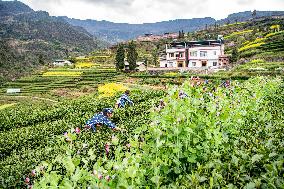
(240326) -- BEIJING, March 26, 2024 (Xinhua) -- An aerial drone photo taken on March 24, 2024 shows the scenery in Futian Town of Wushan County, southwest China's Chongqing. The 15,000 mu (about 1,000 hectares) of tea gardens in Futian Town have entered the spring tea picking period. Farmers are taking the time to collect tea leaves to make spring tea. In recent years, Futian Town has vigorously developed tea industry, and established four village collective tea processing plants and six village collective tea gardens. Brand teas such as "Wushan Spring Tea" and "Wuxia Black Tea" have become characteristic agricultural products of the town. (Xinhua/Tang Yi)

  •  
CHINA-CHONGQING-FUTIAN TOWN-TEA GARDEN (CN)

CHINA-CHONGQING-FUTIAN TOWN-TEA GARDEN (CN)

(240325) -- CHONGQING, March 25, 2024 (Xinhua) -- Farmers pick tea leaves at a tea garden in Futian Town of Wushan County, southwest China's Chongqing, on March 24, 2024. The 15,000 mu (about 1,000 hectares) of tea gardens in Futian Town have entered the spring tea picking period. Farmers are taking the time to collect tea leaves to make spring tea. In recent years, Futian Town has vigorously developed tea industry, and established four village collective tea processing plants and six village collective tea gardens. Brand teas such as "Wushan Spring Tea" and "Wuxia Black Tea" have become characteristic agricultural products of the town. (Xinhua/Tang Yi)

  •  
CHINA-CHONGQING-FUTIAN TOWN-TEA GARDEN (CN)

CHINA-CHONGQING-FUTIAN TOWN-TEA GARDEN (CN)

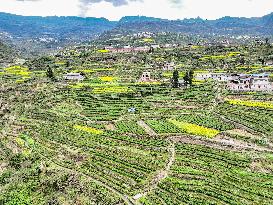
(240325) -- CHONGQING, March 25, 2024 (Xinhua) -- An aerial drone photo taken on March 24, 2024 shows a view of tea gardens in Futian Town of Wushan County, southwest China's Chongqing. The 15,000 mu (about 1,000 hectares) of tea gardens in Futian Town have entered the spring tea picking period. Farmers are taking the time to collect tea leaves to make spring tea. In recent years, Futian Town has vigorously developed tea industry, and established four village collective tea processing plants and six village collective tea gardens. Brand teas such as "Wushan Spring Tea" and "Wuxia Black Tea" have become characteristic agricultural products of the town. (Xinhua/Tang Yi)

  •  
CHINA-CHONGQING-FUTIAN TOWN-TEA GARDEN (CN)

CHINA-CHONGQING-FUTIAN TOWN-TEA GARDEN (CN)

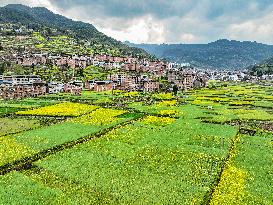
(240325) -- CHONGQING, March 25, 2024 (Xinhua) -- An aerial drone photo taken on March 24, 2024 shows the scenery in Futian Town of Wushan County, southwest China's Chongqing. The 15,000 mu (about 1,000 hectares) of tea gardens in Futian Town have entered the spring tea picking period. Farmers are taking the time to collect tea leaves to make spring tea. In recent years, Futian Town has vigorously developed tea industry, and established four village collective tea processing plants and six village collective tea gardens. Brand teas such as "Wushan Spring Tea" and "Wuxia Black Tea" have become characteristic agricultural products of the town. (Xinhua/Tang Yi)

  • Main
  • Top
  • Editorial
  • Creative
  • About Us
  • About ILG
  • Terms of use
  • Company
  • BEHIND
  • Price List
  • Single Plan
  • Monthly Plan
  • Services
  • Shooting
  • Rights Clearance
  • Support
  • FAQ
  • How To Buy
  • Contact Us
  • Become a Partner

© KYODO NEWS IMAGES INC

All Rights Reserved.

  • Editorial
  • Olympics
  • News
  • Sports
  • Japan
  • Tech
  • Royal
  • Disaster
  • NorthKorea
  • Old Japan
  • SNS
  • Creative
  • Food
  • Japan
  • Landscape
  • Animal
  • Popular
  • #Ukraine
  • #Thailand
  • #coronavirus
  • #N. Korea
  • #Russia
  • #China
  • #Ukraine
  • #Thailand
  • #coronavirus
  • #N. Korea
  • #Russia
  • #China
  • Food
  • Japan
  • Landscape
  • Animal
  • Olympics
  • News
  • Sports
  • Japan
  • Tech
  • Royal
  • Disaster
  • NorthKorea
  • Old Japan
  • SNS